


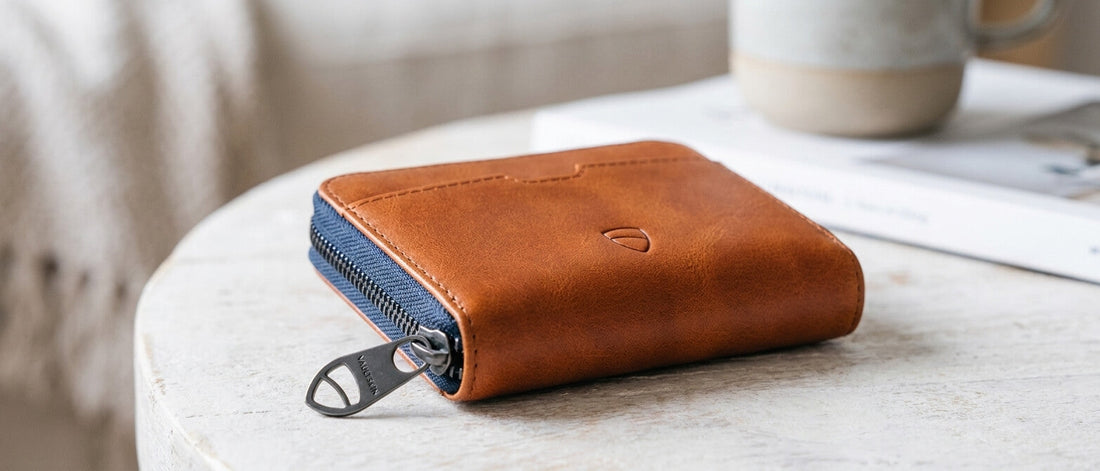
The label on your wallet says full grain or top grain. Both can be quality leather. The useful difference is how the surface is finished, and what that means for the feel, appearance and everyday use of the wallet in your pocket.
We make wallets, so we have a stake in how this question is answered. Vaultskin wallets are made from top-grain leather, chosen for its balance of supple feel, durability and refined appearance. Understanding the material helps explain that choice.
Our position is this. A good wallet starts with quality leather, but it also needs thoughtful construction. The hide, tanning, finish, thickness and stitching all matter. Full grain and top grain describe the surface treatment; neither label tells the whole story on its own.
Almost none of this is visible in a product photograph. A smooth, consistent surface and a more visibly natural grain each have their appeal. What follows is how to understand the difference with your own hands, what thickness means once the leather is in a wallet, and why top grain is well suited to everyday carry.
What the tannery does to the surface
Start with the hide. The upper section has a dense fibre structure and is used for both full-grain leather and the refined leather commonly sold as top grain. Terminology can vary, so it helps to look beyond the name and understand how the leather has been finished.
Full grain means the natural grain surface is left unsanded. Healed marks and variations in the grain may remain visible, depending on the finish. That individual character is part of its appeal.
Top grain commonly refers to leather whose surface has been lightly buffed or sanded to reduce irregularities before finishing. A texture may also be embossed. This produces a more even appearance while retaining the substance and flexibility of real leather.
The result is a refined surface with a consistent look and a comfortable feel. Quality top-grain leather is a considered material choice for a wallet that needs to look smart and feel good in the hand.
Why a wallet needs flexibility as well as strength
A wallet closes along the same line each time you pay. It also moves in a pocket, brushes against clothing and is handled throughout the day. The leather and its finish need to work together through that routine.
Full-grain leather can develop a distinctive patina, with colour and sheen changing through handling. Top-grain leather can also soften and gain character with use, although the way it ages depends on the tanning and surface finish.
Light surface refinement does not mean a wallet is destined to crack or wear out at the fold. Leather quality, a flexible finish, sound construction and sensible care all influence how it performs. A grade label alone cannot predict its lifespan.
You can check this on leather you already own. Look at the spine and outer corners, then feel how comfortably the wallet opens and closes. Natural creasing is part of leather use. Keeping the wallet comfortably filled, rather than overstuffed, helps it retain its shape.
A well-made top-grain wallet can bring together a slim profile, a supple feel and the structure needed to keep everyday essentials organised.
Ounces, and what they mean once the leather is in your pocket
Hide suppliers do not describe leather by surface alone. Thickness is often measured in ounces, where 1 oz is roughly 1/64 of an inch, about 0.4 mm. For a wallet, the useful thickness depends on whether the leather forms an outer panel, a card slot or a lining.
The aim is a piece firm enough to hold its shape but supple enough to fold and stitch cleanly. More thickness is not automatically better. Several layers meet around card slots and seams, and each contributes to the finished wallet's profile.
Our own pieces show why that balance matters. The CITY bifold and MOORGATE cardholder are designed around compact everyday carry. Leather selection and careful construction help keep that profile comfortable in a pocket. How card count decides which shape suits you is a separate question, and we have worked through it in our minimalist wallet guide.
That is the practical case for choosing leather as part of the whole design. A well-made top-grain wallet can bring together a slim profile, a supple feel and the structure needed to keep everyday essentials organised.
Four checks before you pay
None of this needs a loupe. It needs about 30 seconds and the willingness to handle the thing rather than judge it from a label.
- Ask what leather is used and how it is finished. Clear material information is more useful than a grade name alone.
- Feel the surface and open the wallet naturally. Look for a comfortable feel and an easy fold without forcing the leather backwards.
- Inspect the stitching, edges and card slots. Even stitching and neatly finished edges are part of a well-made wallet.
- Check the layout with your everyday carry in mind. The right capacity helps keep the wallet comfortable without stretching it through overfilling.
Why top grain is a considered choice
Top grain comes from the upper section of the hide. Its refined finish gives it qualities that are especially useful in a wallet: a pleasing feel, a consistent appearance and flexibility for daily handling.
The first is uniformity. A wallet and a passport cover in a coordinated colour benefit from an even finish. Surface refinement helps create a clean, considered look while preserving the character of a real leather accessory.
The second is feel. A wallet is something you handle every day. Carefully selected top-grain leather can feel supple and comfortable while giving the finished piece enough body to hold its shape.
The third is everyday practicality. A suitable finish can help protect the surface during normal use, while the leather remains comfortable to carry. At Vaultskin, top-grain leather works alongside thoughtful layouts and RFID protection to create wallets designed for modern everyday life.
The verdict, and one rule for the shop
Full grain and top grain can both make excellent wallets. Full grain appeals to those who enjoy a more visibly natural surface; top grain offers a refined appearance, a supple feel and the durability of quality leather when well selected, made and cared for. Our choice of top-grain leather reflects the balance we want in a Vaultskin wallet.
The rule of thumb is short enough to remember at the counter. Choose the whole wallet: the quality of the leather, the finish, the construction and how it fits your day. Those details are what turn a good material into an accessory you enjoy carrying.