


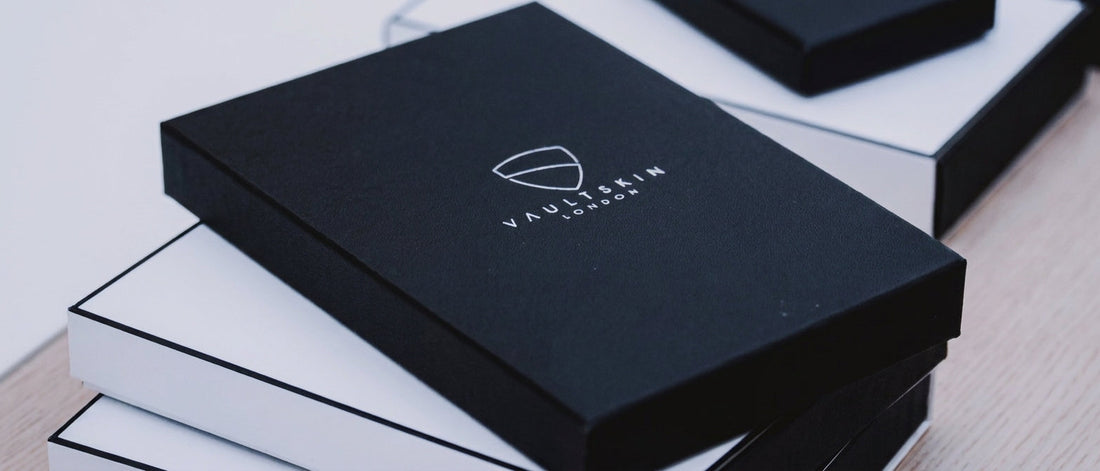
Open the second drawer of your desk. Behind the charger cables there is a pen with another company's name on it, and probably a stress ball, and a tote bag folded into a tight rectangle. You have never used any of them. You have never thrown them away either, which is the strangest part, and the part this article is about.
Corporate gifts do not fail because the sender was mean. They fail because the object has nowhere to go. A mug needs a cupboard the recipient already keeps too many mugs in, and a power bank needs a cable it did not arrive with. A branded notebook needs a person who still writes on paper, and even then it is competing with the notebook they chose.
So the question on your desk this quarter is not "what do we send". It is "what will still be in their possession in March". That is a different brief, and a harder one, because an honest answer rules out most of the catalogue.
Why the decision is harder than the catalogue makes it look
The gifting industry runs on volume, and volume favours anything that takes print. So the default menu is drinkware, tech accessories, apparel and food, each available with a logo in 5 working days. The catalogue is not lying to you. It is optimised for the sender's convenience rather than the recipient's pocket, and those are two different things.
The evidence on the default is not kind. In one survey, 54% of people who receive corporate gifts said they had thrown at least one away without ever using it, and the same study found companies spending a median of $30 per gift while clients expected something closer to $100 (business.com). Asked which gifts they least wanted, recipients put logo-heavy branded swag and service discounts among the first named (business.com).
Promotional products fare no better when counted on their own. ASI's Global Ad Impressions Study found 23% are thrown away outright and 55% are passed along to someone else rather than kept and used (sendoso). Read those two figures together and fewer than a quarter of promotional items stay with the person they were addressed to. The tote bag in your drawer is, statistically, on its way to a nephew.
Here is why this is worth 10 minutes rather than a reorder. The gap between $30 and $100 is not a gap in generosity, it is a gap in judgement, and the recipient reads it as one. We make leather wallets, so weigh what follows with that in mind, but the 3 checks below apply to anything, including things we will never sell, and you can run every one of them before you sign a purchase order.
Three checks that separate a gift from a giveaway
None of these needs a supplier's word. Each is something you can settle with your own hands, or your own bank account.
- The pocket test. Does it replace something the recipient already carries every day, in a pocket they already use? If the gift needs a new habit or a new shelf, it needs a drawer, and you know how that ends.
- The receipt test. Would you buy this for yourself, at this price, with your own money, and not feel slightly foolish? A $30 median against a $100 expectation suggests most senders would not.
- The logo test. Can the recipient find your name on it without anyone else seeing it? A brand embossed inside a flap is a memory. A brand printed across the outside is an advertisement, and the recipients have already told researchers what they think of those.
The pocket test does most of the work, so it is worth being concrete about what passes it. A slim leather card holder such as our BRIXTON measures 106 x 74 x 5 mm and weighs 23 g, close to the footprint of a payment card and thinner than a pencil, with an ID window for the pass or licence its owner shows most often. It holds folded notes alongside the cards in any currency, which matters the moment a client list crosses a border. Nothing about it asks the recipient to change a habit: it slides into the pocket where the old one was.
A discount is an invoice with a bow on it.
How the usual options hold up
Branded drinkware and tech accessories fail 2 of the 3 checks at once. They ask for cupboard space and they carry your name on the outside, which is exactly the profile of the item that gets passed along.
Discounts and vouchers fail the receipt test in a way that is almost elegant. A discount is an invoice with a bow on it. It reminds the client that they are a customer at precisely the moment you were trying to suggest they were something more.
Food and drink is where something we do not sell beats us. A good hamper fails the pocket test on purpose: it is eaten, so it never needs storing, and it can be shared around an office, which is the one situation where being passed along is the point. For a new relationship, or a list of 200 names where a personal object would feel presumptuous, food is the better gift. Its only weakness is memory, because by March there is nothing left to remind anyone of you.
Leather goods pass all 3 checks, but only when the object is right for the person, and that is a real condition rather than a marketing hedge. A bulky wallet fails the pocket test as surely as a mug does, and so does one that will not take the recipient's banknotes. Whether a given person is a cardholder person or a bifold person is worth a minute's thought, and there are 3 checks with your own cards that settle it before you commit a budget.
For employee gifts the same checks apply, with one addition. Gallup found 61% engagement among employees who receive manager feedback and recognition at least weekly, against 38% among those who get feedback but recognition less often. That is a finding about frequency, not about parcels, and it should be read straight: no object replaces the conversation. What a well-chosen object does is stay in the room after the conversation ends, and a cardholder carried every day is a small daily reminder that somebody chose it for that person.
Where the logo goes, and why the engineering matters more than the print
The leather trade has a term for a logo that does not shout: blind embossing, pressed into the hide without foil or ink. Ask for it on the inside face, small, where the owner sees it each time the wallet opens and nobody across the table ever does. The recipient's own initials on the outside, if you can arrange them, do more for your reputation than your name ever would, because the object then belongs to them in a way no printed mug can.
Leather also has a quality that printed plastic cannot fake, which is that it improves with handling. A full-grain wallet in its third year is darker and softer than it was in its box, provided its owner has not conditioned it into an early retirement, and so the gift keeps looking better as the memory of receiving it fades.
The quietest feature is the one nobody prints on the box. A contactless card answers a reader at 13.56 MHz across a working distance of up to 10 cm under ISO/IEC 14443, the international standard that governs it. A shielded wallet does one narrow, checkable job: it blocks that wireless read at close range while the card sits inside. Whether the shielding does what it says is something we have set out once, with the evidence, rather than re-arguing in every article.
It is not a defence against the online fraud that accounts for the larger loss figures, and we would rather say so plainly than let a statistic imply otherwise. In the UK, card fraud losses on internet and e-commerce transactions rose 11% to £225.0 million (UK Finance). In the US, the FTC logged more than 1.3 million identity theft reports in 2025, with losses across fraud and identity theft above $15.8 billion (Experian). Against that weather, a wallet that quietly closes one door is engineering rather than theatre, and the question of whether it is worth having when nobody has ever skimmed you has a calmer answer than either the brochures or the sceptics give it.
The recommendation, and the one thing to check before you order it
For a client or an employee you want to keep, send a slim leather wallet with your name inside and theirs outside, and we say that as the people who make them. Which wallet is decided by one fact you can establish without asking anyone: what banknotes the recipient carries.
For a US list, that means the MANHATTAN: an RFID-blocking leather bifold at 104 x 76 x 10 mm and 39 g, which takes US dollar notes flat and unfolded, along with Canadian, Australian and Japanese notes, and does not take pounds or euros. For a London or European list, the same idea is the CITY, 77 x 98 x 10 mm and 38 g, built for pound and euro notes flat, and it will not take a dollar bill. Send the wrong one and you have made the leather equivalent of the power bank without a cable: a handsome object that fails the pocket test on day 1.
For a mixed international list, or whenever you do not know, the cardholder route sidesteps the currency question altogether, because a folded note travels with the cards. That is the case for the BRIXTON above, and it is the safer choice for 50 names spread across 3 continents. A bifold is the better gift for the 5 people whose banknotes you know.
Verdict: send the thing you would be pleased to find in your own pocket
The bin is not the enemy. The drawer is, because a gift in a drawer is a decision the recipient has postponed, and postponed decisions curdle. Something eaten within a week has done its job. Something carried for 3 years has done a different and better one, and nothing printed on plastic has ever managed it.
So run the 3 checks on whatever is in your basket now. If it is a wallet and the banknotes are right, it will pass. If it is a wallet and the banknotes are wrong, you now know before the recipient does. Our RFID wallets collection is where the CITY sits beside the MANHATTAN, and the first thing to settle on either, before colour or budget, is which banknote it must take.