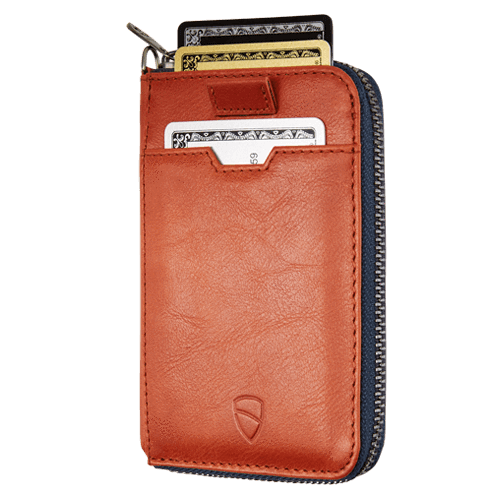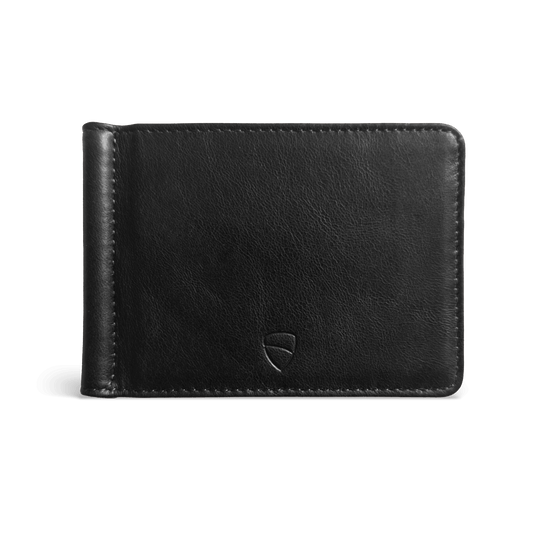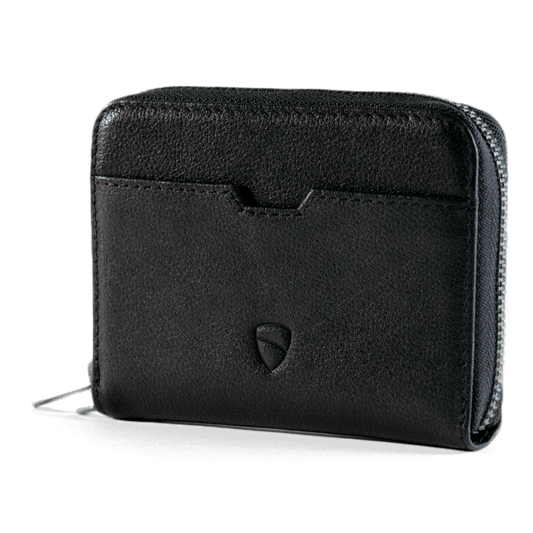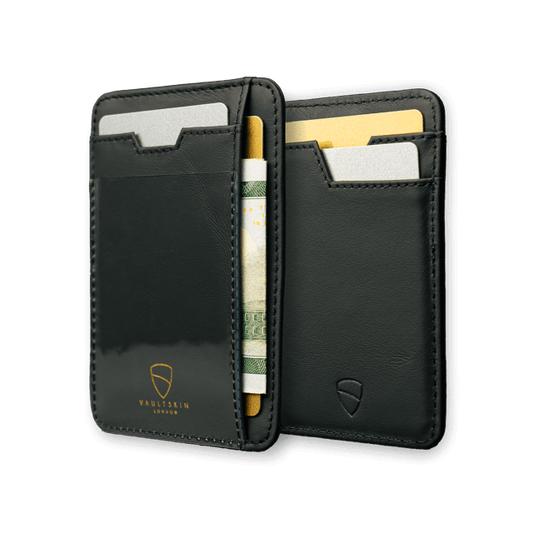

Unsure which wallet best fits your style and needs? Explore our Wallet Comparison Chart to effortlessly find your perfect match.

Vaultskin RFID Wallets: Secure, Sleek, and Timeless

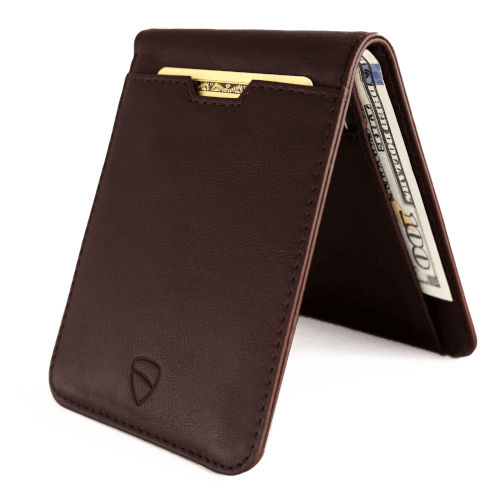
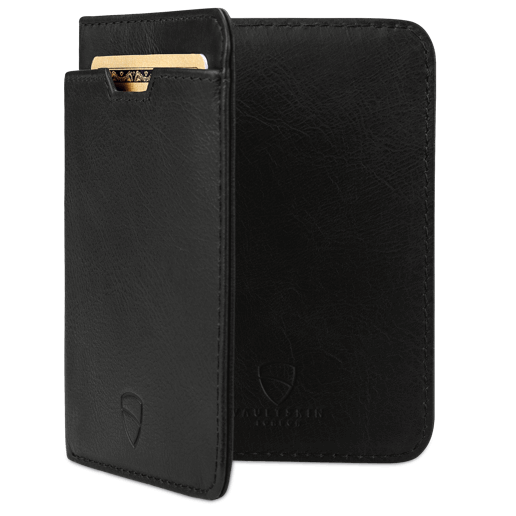
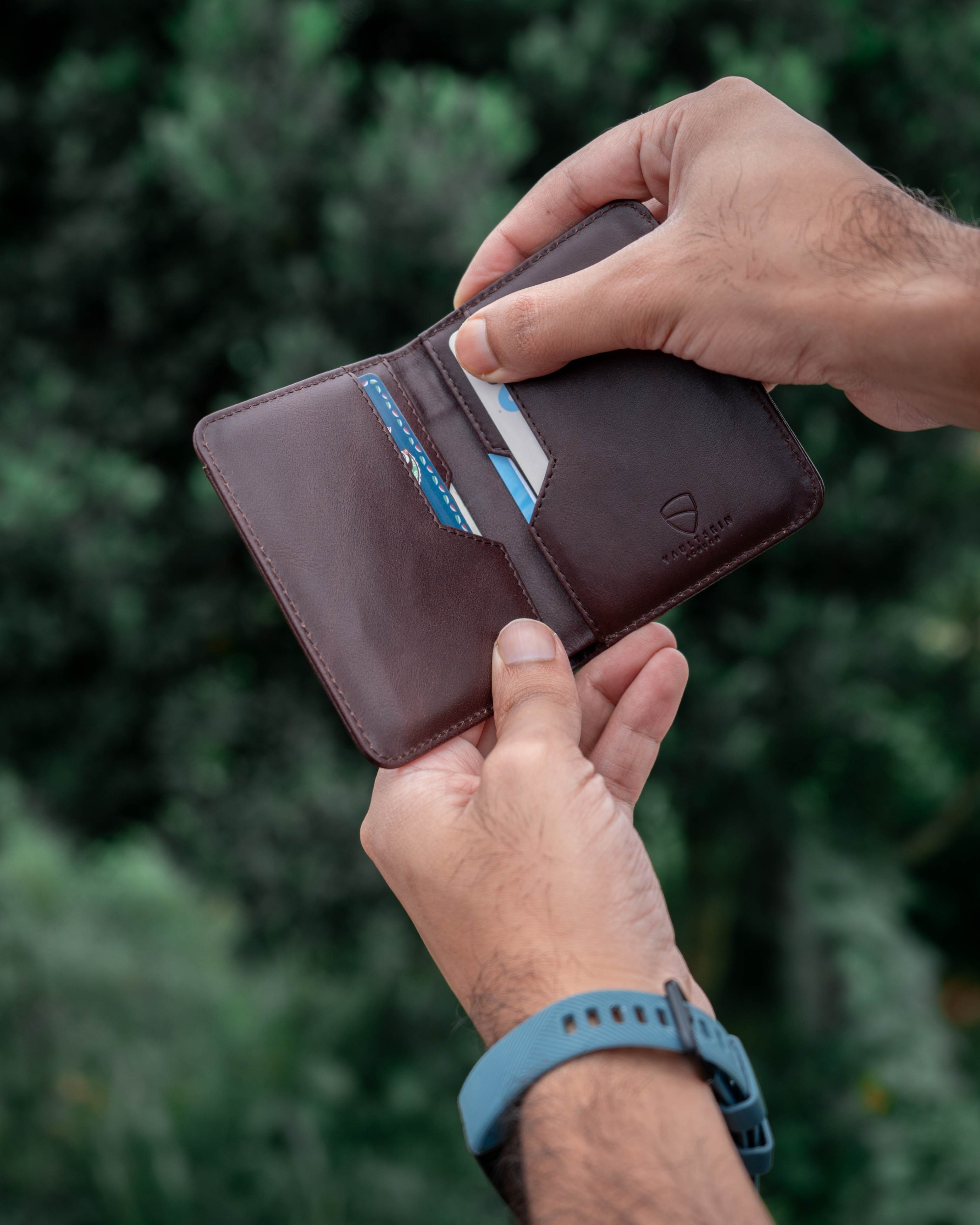
Your wallet is more than a necessity—it’s an extension of your style. Vaultskin’s collection of mens wallets blends refined British design with advanced security, ensuring every carry is both elegant and protected. Crafted from premium leather, each RFID wallet is designed to shield your cards from digital theft while maintaining a slim, sophisticated profile.

Designed for Modern Minimalism

Whether you prefer a bifold wallet with structured organization or a card wallet for effortless access, our collection is tailored for those who appreciate precision and craftsmanship. Every leather wallet is thoughtfully designed to age beautifully, making it a lasting addition to your essentials.

  • Slim wallet styles keep bulk to a minimum while maximizing function.
  • Advanced RFID blocking wallet technology protects your personal data.
  • A refined take on the wallet for men, where design meets security.

From weekday commutes to evening engagements, our designer wallets redefine how a men wallet should feel - understated, practical, and effortlessly elegant. Explore the collection and carry with confidence.

FAQ

What is an RFID wallet?

An RFID wallet is a wallet with a shielding layer built into its lining that stops radio signals from reaching your cards. Contactless bank cards carry a small chip and antenna that respond to a reader's radio field: that is what makes tap-to-pay work, and it is also what a hidden reader could exploit. The shielding layer, known as a Faraday cage lining, is designed to block those signals, so cards inside stay out of a reader's reach. Vaultskin builds this lining into every wallet as standard, with nothing to charge and no bulk added.

Do RFID wallets actually work?

Yes. RFID blocking is physics rather than electronics. A contactless card has no battery: it only answers when a reader's electromagnetic field powers it up. A Faraday cage lining absorbs and redistributes that field, so a card inside never receives the energy it needs to respond. The same shielding principle protects sensitive equipment in laboratories and aircraft. Because the protection is a physical layer sewn into the wallet, there is nothing to switch on and nothing to run out. Quality does vary across the market, which is why it is worth knowing how to test a wallet yourself; see the testing question below.

How does card skimming actually work?

Card skimming, sometimes called digital pickpocketing, uses the same radio technology as legitimate tap-to-pay. A portable reader, or simply a standard payment terminal carried in a bag, is brought close to a victim's pocket in a crowded place such as a train or a queue. The reader powers the card's chip and can capture data such as the card number and expiry date without any physical contact. The practical range is short, usually a few centimeters, which is exactly why crowds are where it happens: brushing past someone is close enough.

What is a Faraday cage, and how does my wallet use one?

A Faraday cage is an enclosure of conductive material that blocks electromagnetic fields, named after Michael Faraday, who demonstrated the effect in 1836. When radio waves hit the conductive layer, the energy spreads across the outer surface and does not reach the inside. Vaultskin wallets use this principle in a thin metallic lining sewn between the leather and the interior. Since a contactless card is powered entirely by the reader's field, a card resting inside a Faraday cage lining stays inert: the signal that would wake it never arrives.

Can my card be scanned while it's in my wallet?

In an ordinary wallet, in principle yes. Leather, fabric and plastic are all transparent to radio waves, so a contactless card responds to a nearby reader as readily from inside a normal wallet as it does at a checkout. That is by design: convenience is the whole point of contactless. An RFID-blocking wallet changes this. Its shielded lining is designed to keep reader signals away from your cards, so they stay silent until you take them out to pay.

Do I still need RFID protection?

An honest answer: the risk is real but modest, and banks have reduced it. Contactless payments carry transaction limits, and unauthorized charges are usually refunded once reported. What the limits do not cover is the data itself: on many cards, the number and expiry date can be read silently, and that is enough for some kinds of online fraud. RFID protection is best understood as insurance built into something you carry anyway. It removes one specific risk at no cost in convenience, and it spares you ever having to think about it.

Does aluminum foil block RFID?

Mostly, yes. Foil is conductive, so a card wrapped in it is shielded on the same principle as any Faraday cage. It is a fair test of the physics and a poor everyday solution: foil tears, crumples, needs rewrapping every time you pay, and hands the checkout queue a story to tell. An RFID-blocking wallet is the same physics made permanent, sewn invisibly into the lining of something you would carry anyway.

How can I test that my wallet really blocks RFID?

Easily, and we encourage it. At a self-checkout, try paying with the card still inside your Vaultskin wallet, held flat against the reader: the terminal stays silent, and the payment goes through the moment you slide the card out. Or hold an Android phone with a free NFC reader app against the loaded wallet: it finds nothing, then detects the chip instantly once the card is out in the open. A minute of testing, and that silence is the Faraday cage lining doing exactly what it was engineered to do.

Will RFID blocking interfere with contactless payments or Apple Pay?

No. The shielding is passive and only affects what is inside the wallet. Slide a card out and it pays instantly; there is nothing to disable and no residual effect. Your phone is unaffected for the same reason: Apple Pay and Google Pay run on the phone's own NFC chip, which is in your hand rather than inside your wallet when you pay. The only thing an RFID-blocking wallet switches off is the silent, unwanted kind of reading.

Are RFID wallets bulkier than regular wallets?

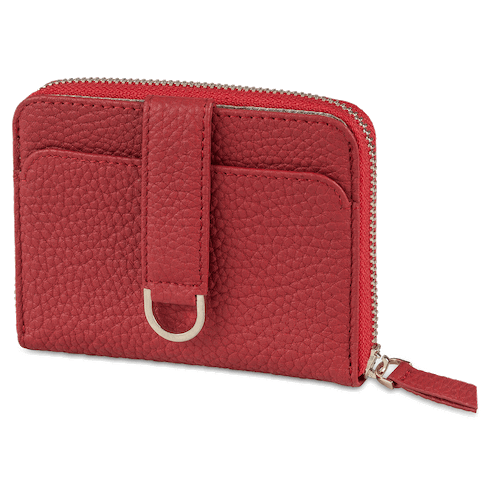
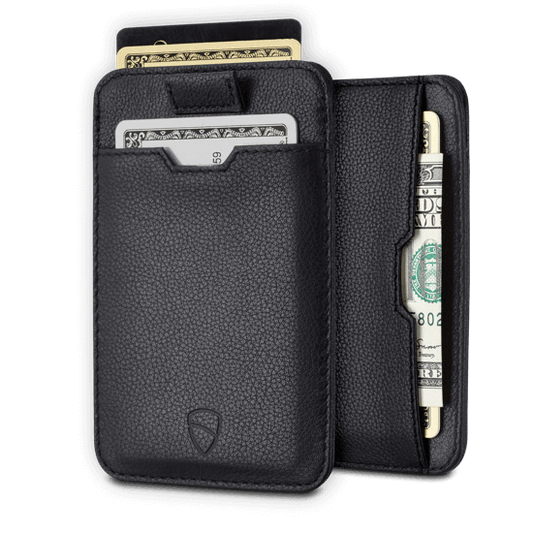
They do not need to be. The shielding in a Vaultskin wallet is a thin lining, not a plate, and it adds no visible thickness. Our wallets and card holders are deliberately slim, minimalist designs made for front-pocket carry, from the MOORGATE card holder to the MANHATTAN bifold. Protection is engineered into the construction rather than added on top, which is how a shielded wallet can still disappear into a pocket.

What leather are Vaultskin RFID wallets made from?

Genuine cowhide leather, with the surface finish varying by model: pebble-grain on some designs, smooth or textured finishes on others. The exact finish is listed on each product page. We are also deliberately plain about terminology in a category that rarely is: full-grain, top-grain and genuine leather mean specific things, and we explain them honestly, including which we use and why, in our leather grades guide. Every wallet is handcrafted and covered by a 2-year warranty.

Which Vaultskin RFID wallet is right for me?

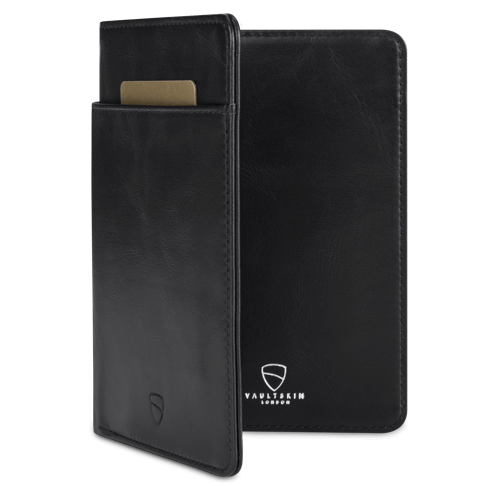
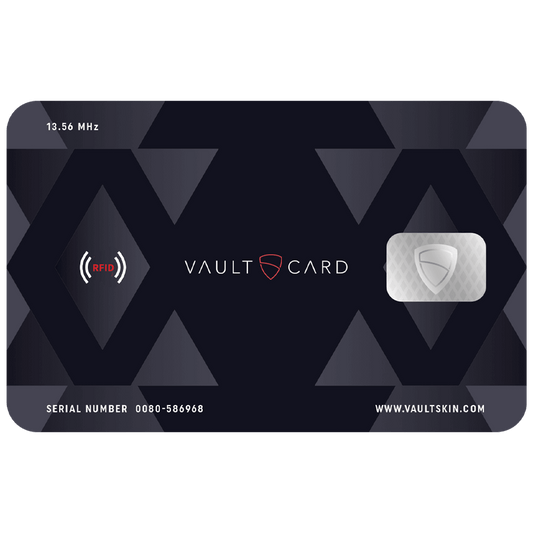
Start with what you carry. If it is cards and little else, a slim card holder such as MOORGATE, BRIXTON or CHELSEA keeps the essentials in a front pocket. If you want cards and notes folded flat, MANHATTAN and CITY are classic bifolds with RFID-blocking lining. For cards, coins and cash together, the zip wallets NOTTING HILL, MAYFAIR and BELGRAVIA close securely around everything, and KENSINGTON adds room for a passport when you travel. Our wallet comparison chart puts them side by side. And if you love a wallet that has no shielding of its own, there is VAULTCARD, our patented RFID jamming card: it blocks 13.56 MHz reader signals from inside any wallet, helping protect the contactless cards around it.